The Birth of the “Ozempic Economy”

Wall Street has already started giving it a name:
the Ozempic Economy.

The phrase refers to the rapidly expanding economic ripple effects created by GLP-1 medications like Mounjaro and Ozempic.

According to reporting from Bloomberg (https://www.bloomberg.com) and CNBC (https://www.cnbc.com), analysts believe these medications could reshape entire consumer industries over the next decade.

Why?

Because when millions of people fundamentally change how they eat, shop, socialize, and consume products, entire markets shift alongside them.

Fast-food companies are quietly reevaluating long-term demand projections.
Snack manufacturers are researching portion trends.
Alcohol companies are monitoring behavioral changes linked to reduced cravings.
Fitness brands are redesigning messaging around metabolic health instead of punishment-based weight loss.

Some airline analysts have even discussed the possibility that large-scale population weight reduction could eventually influence fuel efficiency economics.

That may sound absurd.

Until you realize the scale of what is beginning to happen.

Mounjaro Is Rewriting the Science of Hunger

For decades, obesity treatment largely focused on behavior modification.

Eat less.
Exercise more.
Try harder.

But newer research suggests appetite itself is deeply tied to hormonal signaling, insulin regulation, dopamine pathways, and neurological reward systems.

That is where Mounjaro changes the equation.

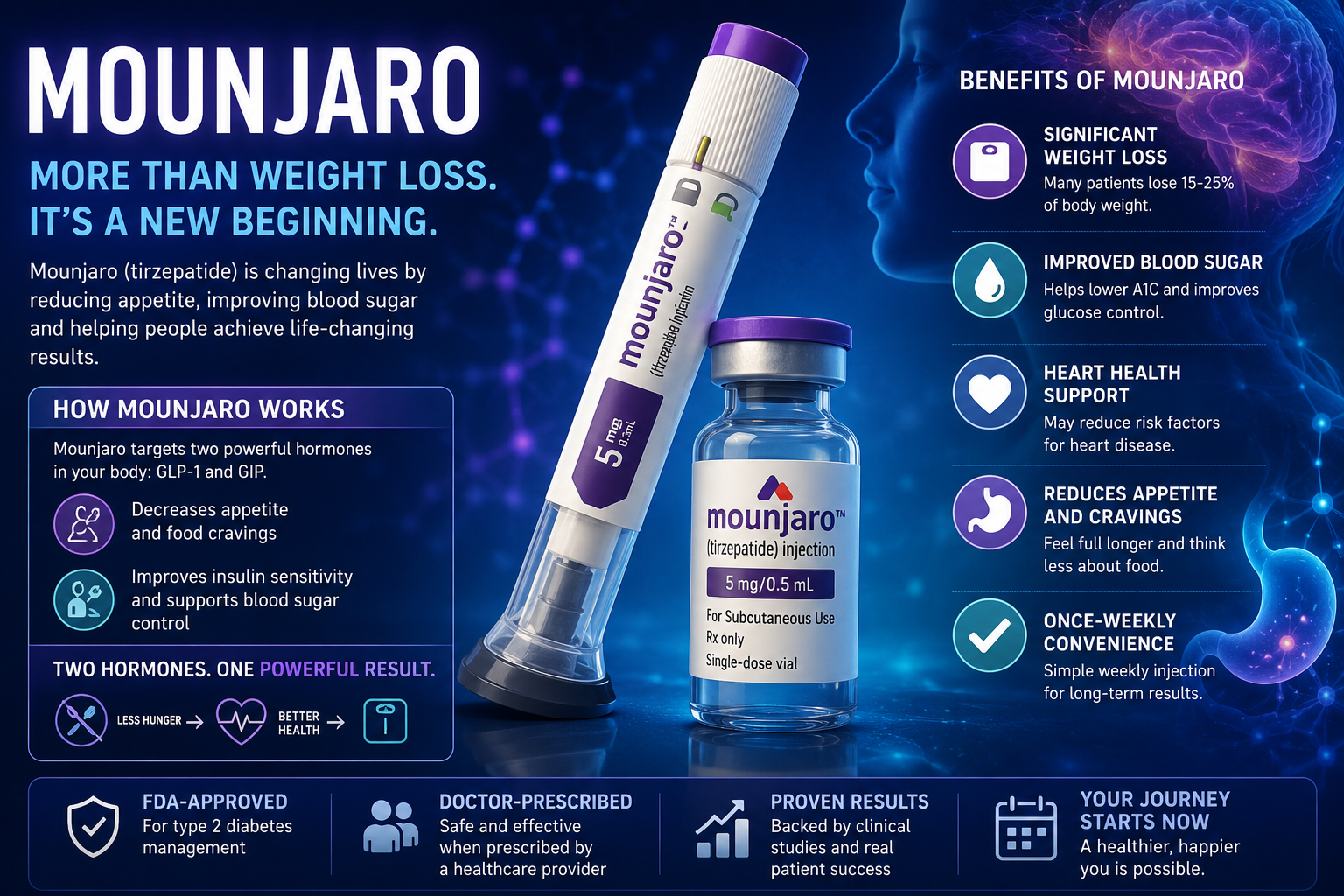
Developed by Eli Lilly and Company (https://www.lilly.com), Mounjaro uses dual-action GLP-1 and GIP receptor technology designed to regulate blood sugar while also influencing hunger and satiety signaling.

Clinical data published by the New England Journal of Medicine (https://www.nejm.org) showed patients achieving levels of weight reduction previously considered nearly impossible without surgery.

And perhaps most importantly:
many users report something unexpected.

Silence.

Not literal silence —
but silence from the constant mental obsession surrounding food.

Online communities now commonly refer to this phenomenon as reducing “food noise,” a term that has rapidly entered mainstream wellness culture.

For many patients, that psychological shift feels more life-changing than the physical transformation itself.

The Rise of Metabolic Status Culture

A decade ago, luxury status symbols revolved around handbags, sports cars, and designer fashion.

Today, a new category is quietly emerging:
metabolic status.

High-performance health optimization is becoming one of the fastest-growing aspirational markets in the world.

Consumers are increasingly investing in:

  • Continuous glucose monitors
  • Longevity testing
  • Hormonal optimization
  • Personalized supplements
  • Sleep tracking technology
  • Concierge telehealth services
  • GLP-1 medications

The modern wellness consumer no longer wants generic dieting advice.

They want precision biology.

And Mounjaro sits directly at the center of that movement.

According to McKinsey & Company (https://www.mckinsey.com), the global wellness market is now valued in the trillions — with personalized health optimization representing one of its fastest-growing sectors.

The future of healthcare may no longer be reactive.

It may become predictive, preventative, and performance-driven.

Why Silicon Valley Is Obsessed With GLP-1s

The tech world has become increasingly fascinated with longevity science.

Executives, founders, and venture capital firms are investing heavily into technologies that promise:

  • Longer health spans
  • Improved cognitive performance
  • Enhanced productivity
  • Reduced inflammation
  • Better metabolic efficiency

GLP-1 medications are now entering those conversations.

Not merely as obesity drugs —
but as potential performance-enhancement tools for modern life.

Coverage from WIRED (https://www.wired.com) and Forbes (https://www.forbes.com) has explored how GLP-1 medications are becoming intertwined with Silicon Valley’s broader obsession with optimization culture.

This raises profound questions.

If these medications continue evolving, could future generations view metabolic regulation the same way society now views fitness trackers or vitamins?

Could appetite management become normalized preventive healthcare?

Could obesity rates decline dramatically over the next twenty years?

The answers remain uncertain.

But the direction of the trend is becoming increasingly difficult to ignore.

Telehealth Created the Perfect Storm

Mounjaro’s explosive rise did not happen in isolation.

It arrived during the simultaneous rise of telehealth.

Consumers can now:

  • Speak with medical providers online
  • Receive prescriptions digitally
  • Access ongoing coaching remotely
  • Track progress through health apps
  • Manage treatment without traditional clinic visits

Research from Deloitte (https://www.deloitte.com) shows that digital healthcare adoption accelerated dramatically following the pandemic era, permanently changing patient expectations.

Convenience became healthcare infrastructure.

And GLP-1 medications became one of telehealth’s biggest breakout categories.

For many patients, the process feels less like traditional medicine —
and more like entering a modern health-tech ecosystem.

The Next Pharmaceutical Arms Race Has Already Started

The success of Mounjaro has triggered an industry-wide race among pharmaceutical giants.

Companies are now investing billions into:

  • Next-generation obesity drugs
  • Oral GLP-1 medications
  • Multi-hormone metabolic therapies
  • Longevity-focused treatments
  • Appetite regulation research

Morgan Stanley analysts have projected the GLP-1 market could eventually grow into a multi-hundred-billion-dollar category globally.

That number would place these medications among the largest pharmaceutical opportunities in modern history.

And yet, many experts believe we are still only at the beginning.

The Psychological Revolution No One Predicted

The most important impact of Mounjaro may ultimately be emotional rather than physical.

For years, millions of people blamed themselves for failed dieting attempts.

But medications like Mounjaro are helping shift the conversation away from shame and toward biology.

The implications are enormous.

When society begins viewing obesity through a medical lens instead of a moral one, healthcare systems change.
Insurance systems change.
Public policy changes.
Culture changes.

And perhaps most importantly:
people begin treating themselves differently.

That shift alone may redefine the future of wellness.

Final Thoughts

Every generation experiences a handful of innovations that permanently alter human behavior.

The internet transformed communication.
Smartphones transformed daily life.
Artificial intelligence is transforming work.

GLP-1 medications like Mounjaro may ultimately transform the relationship humans have with hunger itself.

Not through discipline.
Not through trends.
Not through another temporary diet.

But through a deeper understanding of the biological systems that shape how we eat, live, and age.

And if that future arrives faster than expected, the true legacy of Mounjaro may not simply be weight loss.

It may be the beginning of the metabolic age.

Mounjaro and the Future of Human Weight Loss: Are We Entering the Appetite-Free Era?

June 8, 2026

The Ozempic Economy: How Mounjaro and GLP-1 Drugs Are Quietly Reshaping Society

June 5, 2026

“Hair Loss Telehealth in 2025: Minoxidil, Finasteride, and the Future of Hair Restoration Online”

April 21, 2026

Mounjaro for Weight Loss: Complete Beginner’s Guide (2026)

May 25, 2026

The Ozempic Economy Is Here — And Mounjaro May Be Building the Future of Human Health

June 10, 2026

Mental Health Telehealth in 2025: How Online Therapy and Psychiatry Are Changing Care Forever

April 21, 2026