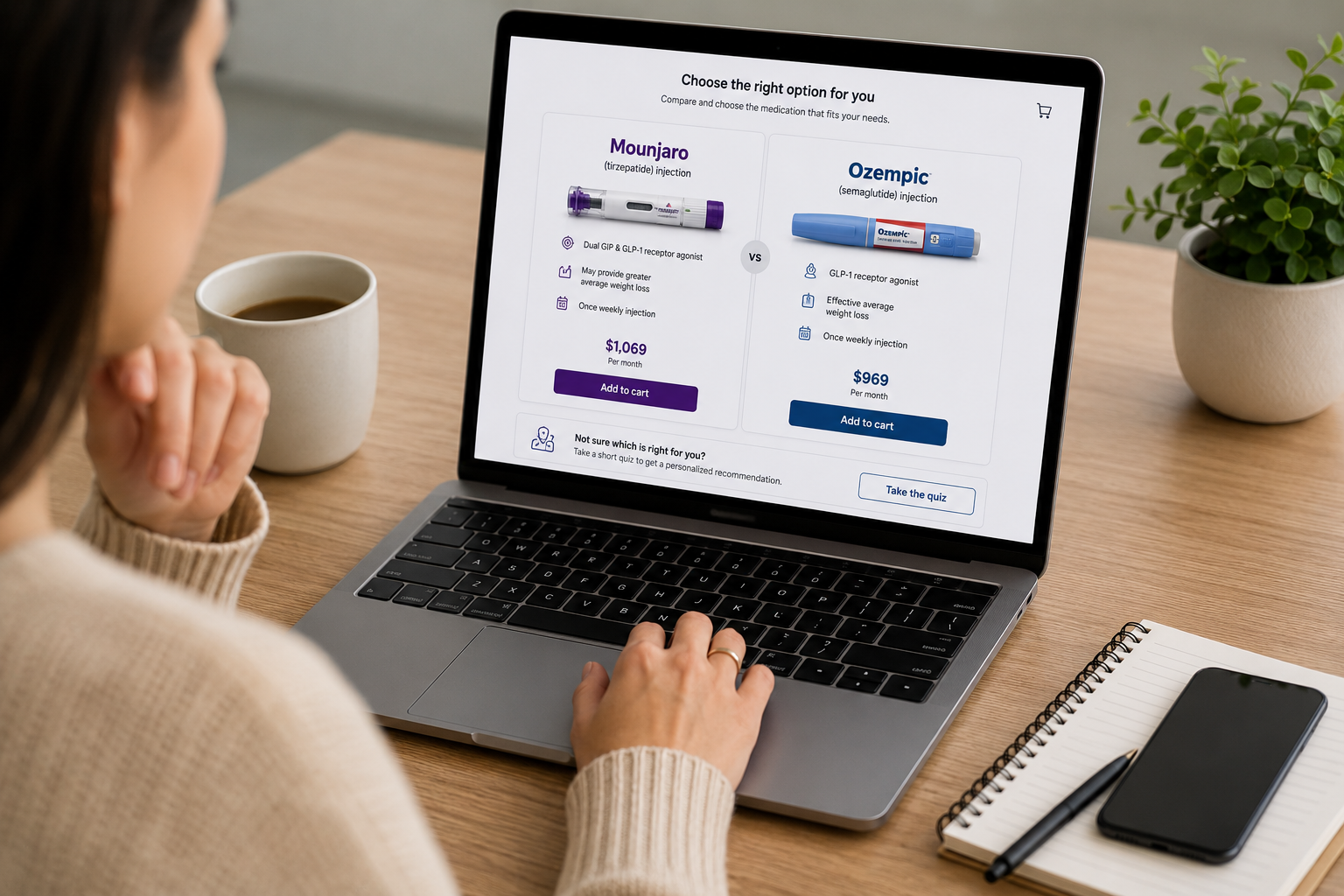
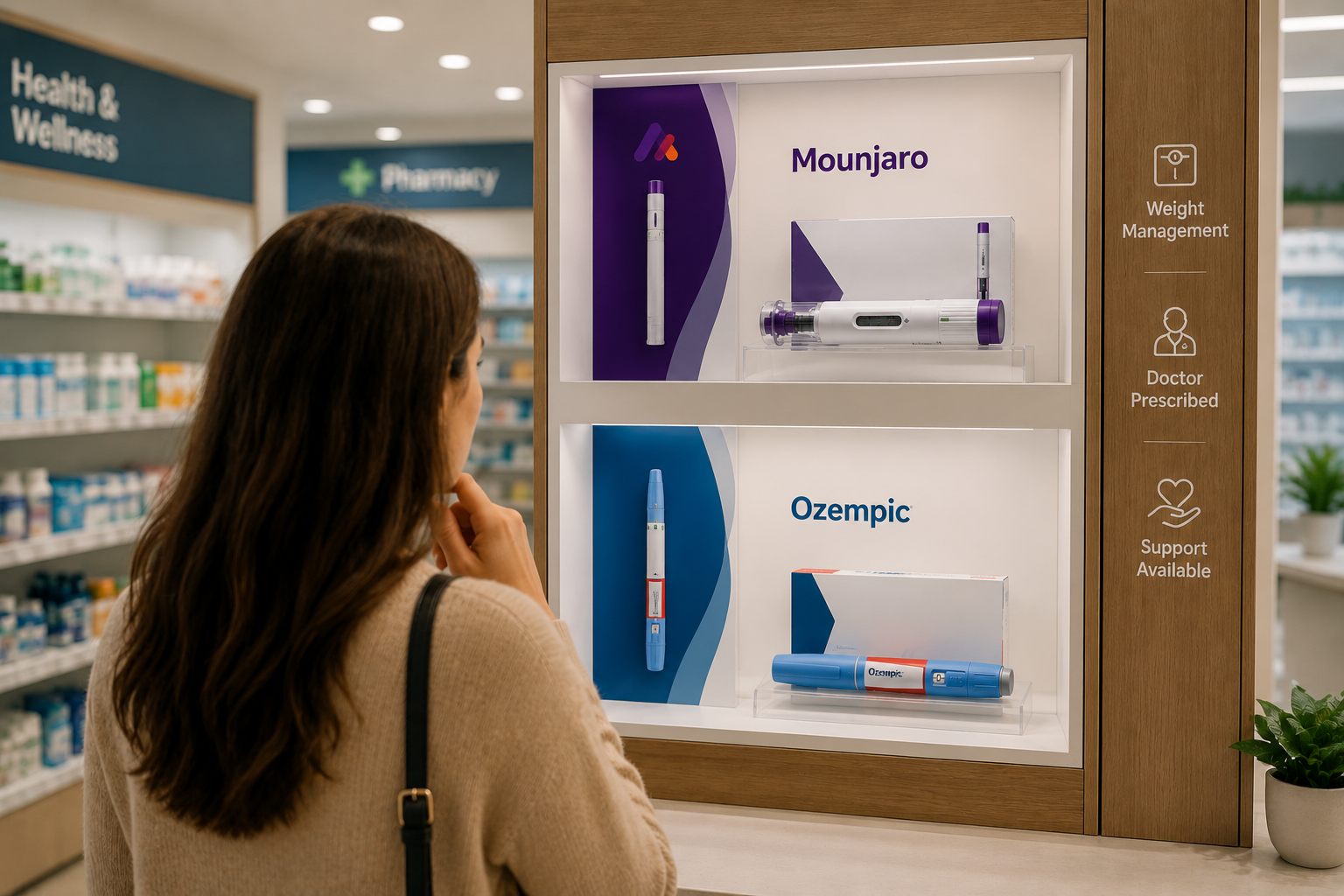
What Is Mounjaro?

Mounjaro is a once-weekly injectable medication that contains tirzepatide, a medication originally developed to help manage blood sugar levels in people with type 2 diabetes. Over time, it gained widespread attention because many users experienced significant appetite suppression and notable weight reduction while using the medication consistently.

Unlike many traditional GLP-1 medications, Mounjaro works on two separate hormone pathways: GIP and GLP-1. These hormones help regulate hunger, digestion, insulin response, and blood sugar levels throughout the body. Because of this dual-action mechanism, many healthcare professionals believe Mounjaro may offer stronger appetite control and potentially greater weight loss outcomes for some individuals compared to older GLP-1 medications.

Common reasons people choose Mounjaro:

  • Strong appetite suppression
  • Weekly injection schedule
  • Potential for significant weight reduction
  • Growing popularity in telehealth programs
  • Dual-action GIP + GLP-1 mechanism

Many users report feeling fuller faster after meals while also experiencing reduced cravings throughout the day. This can make it easier for some people to maintain a calorie deficit without constantly feeling hungry, which is one reason Mounjaro has become increasingly popular among people seeking long-term weight management support.

You can learn more about tirzepatide research through Eli Lilly’s official Mounjaro page.

What Is Ozempic?

Ozempic is another once-weekly injectable medication that uses semaglutide, a GLP-1 receptor agonist designed to help regulate blood sugar levels and improve insulin response. Similar to Mounjaro, Ozempic was initially developed for type 2 diabetes management but quickly became recognized for its role in supporting medical weight loss.

Ozempic works by slowing digestion, helping users feel fuller for longer periods after eating, and reducing overall appetite throughout the day. Over the past few years, it has become one of the most recognized GLP-1 medications worldwide due to the growing number of users sharing successful weight loss experiences online.

Why many people consider Ozempic:

  • Established medication history
  • Strong appetite control
  • Widely recognized brand
  • Weekly dosing convenience
  • Broad telehealth availability

Many healthcare providers continue recommending Ozempic because of its established clinical history, strong brand recognition, and widespread availability through pharmacies and telehealth providers.

For additional semaglutide information, you can visit Novo Nordisk’s Ozempic page.

Main Difference Between Mounjaro and Ozempic

Although Mounjaro and Ozempic are both injectable medications commonly associated with appetite suppression and weight loss, the biggest difference lies in how they work inside the body.

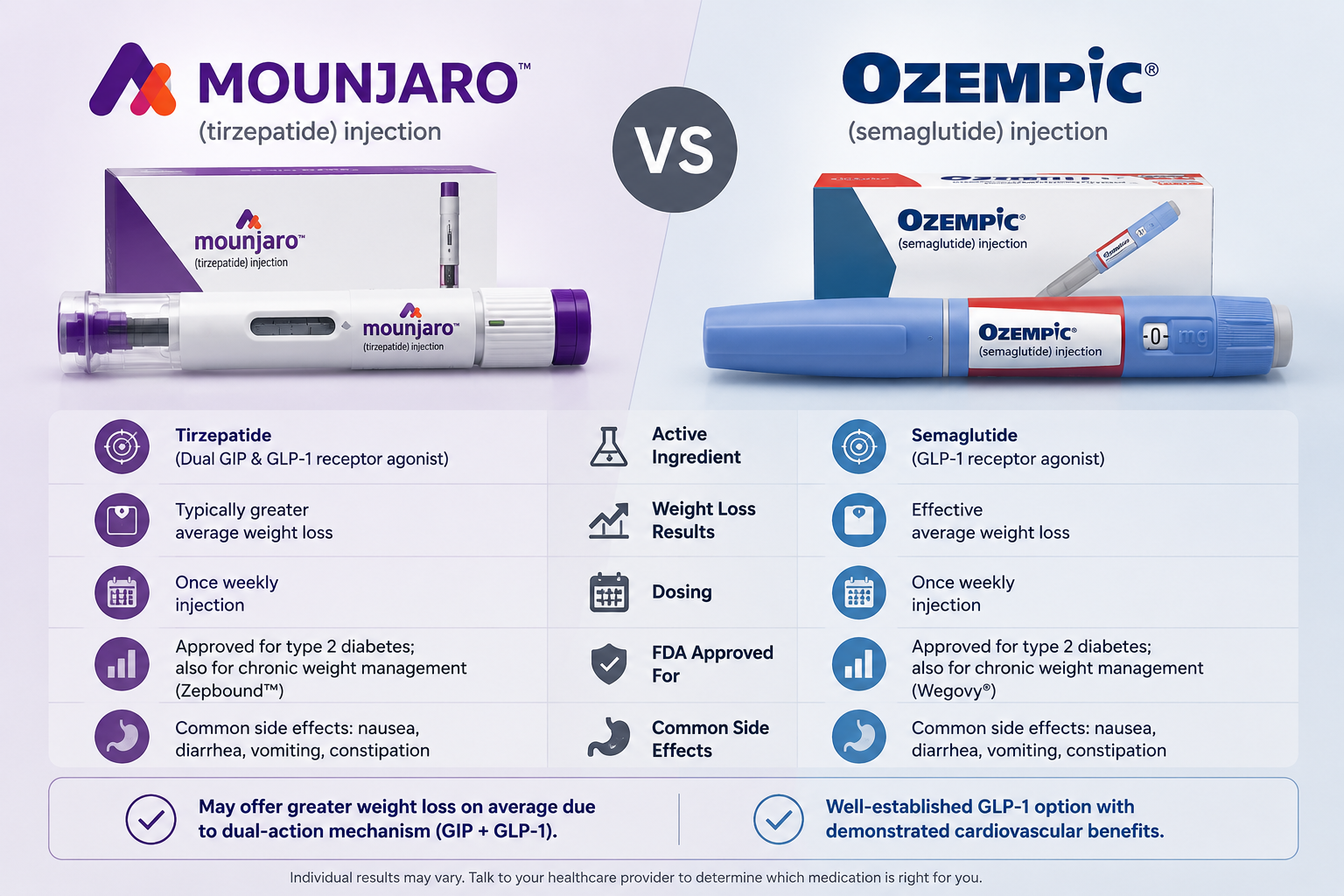
Mounjaro=GIP+GLP-1;Ozempic=GLP-1Mounjaro = GIP + GLP\text{-}1 \quad ; \quad Ozempic = GLP\text{-}1Mounjaro=GIP+GLP-1;Ozempic=GLP-1

Ozempic primarily targets the GLP-1 hormone pathway, while Mounjaro activates both the GIP and GLP-1 receptors simultaneously. This dual-action approach is one reason many experts believe Mounjaro may provide stronger appetite suppression and potentially greater average weight loss for certain users.

Quick comparison:

  • Mounjaro uses tirzepatide
  • Ozempic uses semaglutide
  • Both are weekly injections
  • Both may reduce appetite
  • Both require medical supervision

While both medications help regulate hunger signals and slow digestion, the additional GIP component in Mounjaro may contribute to improved metabolic responses and enhanced feelings of fullness for some individuals.

Which Medication Leads to More Weight Loss?

One of the main reasons people compare Mounjaro and Ozempic is because of the weight loss results associated with both medications. Clinical studies and real-world experiences have shown that many users taking Mounjaro experience substantial weight reduction over time, especially when treatment is combined with healthier eating habits, increased physical activity, and long-term consistency.

Some studies suggest that tirzepatide users may achieve higher average weight loss percentages compared to semaglutide users. This has led many people to describe Mounjaro as one of the strongest GLP-1-related medications currently available for appetite suppression and medical weight management.

However, Ozempic continues to deliver significant results for many individuals as well. Thousands of users have reported successful long-term progress using semaglutide treatments, particularly when paired with sustainable lifestyle changes and medical guidance.

Factors that may affect results:

  • Dosage consistency
  • Diet quality
  • Exercise habits
  • Sleep and stress levels
  • Metabolism and body composition

If you want to compare additional GLP-1 medications, you can also check guides from WebMD and Healthline.

Appetite Suppression and Food Cravings

One of the most noticeable effects users report while taking GLP-1 medications is reduced appetite. Many people describe feeling satisfied after eating smaller portions, experiencing fewer cravings, and thinking less about food throughout the day.

Mounjaro users often report stronger appetite suppression due to the medication’s dual-action mechanism. Some individuals find it easier to avoid snacking, emotional eating, or late-night cravings while using tirzepatide consistently.

Ozempic also provides powerful appetite control for many users. By slowing digestion and helping meals stay in the stomach longer, semaglutide can help people feel full for extended periods after eating.

Appetite-related benefits people commonly report:

  • Feeling full faster
  • Reduced snacking
  • Lower calorie intake
  • Fewer sugar cravings
  • Better portion control

Side Effects Comparison

Both medications share many similar side effects because they affect digestion, appetite regulation, and stomach emptying. The most commonly reported side effects include nausea, constipation, diarrhea, bloating, fatigue, stomach discomfort, and reduced appetite, especially during the first few weeks of treatment or after dosage increases.

Common side effects include:

  • Nausea
  • Vomiting
  • Constipation
  • Diarrhea
  • Fatigue
  • Bloating
  • Stomach discomfort

Some users may also experience acid reflux, headaches, or temporary digestive discomfort while the body adjusts to treatment. Healthcare providers often recommend increasing doses gradually to help minimize gastrointestinal side effects and improve overall tolerance.

You can review official medication safety information through the U.S. Food and Drug Administration (FDA).

Cost and Telehealth Availability

Cost is another major factor when deciding between Mounjaro and Ozempic. Pricing can vary depending on insurance coverage, pharmacy availability, telehealth subscriptions, and regional medication shortages.

Today, many telehealth companies offer online consultations for GLP-1 medications, allowing users to:

  • Complete eligibility screenings online
  • Speak with licensed healthcare providers
  • Receive prescription recommendations
  • Access medication delivery services
  • Get ongoing dosage support

As competition between telehealth providers continues to grow, many people now compare pricing, customer support, consultation quality, and subscription plans before selecting a GLP-1 treatment program.

You may also want to compare pricing information using resources like GoodRx.
Which Medication Should You Choose?

For some individuals, Mounjaro may feel like the stronger option because of its dual-action mechanism and growing reputation for aggressive appetite suppression. Others may prefer Ozempic because of its longer market presence, familiarity, and broader recognition among healthcare providers.

Mounjaro may appeal to people looking for:

  • Strong appetite suppression
  • Dual-action hormone support
  • Aggressive weight loss goals
  • Newer GLP-1 treatments

Ozempic may appeal to people looking for:

  • Established treatment history
  • Familiar semaglutide medication
  • Gradual long-term progress
  • Wide pharmacy availability

The best medication ultimately depends on personal health conditions, treatment goals, side effect tolerance, lifestyle habits, and professional medical guidance.

Final Thoughts

As GLP-1 medications continue gaining popularity throughout 2026, more people are turning to telehealth platforms for accessible weight loss support and medical consultations. Both Mounjaro and Ozempic have transformed the conversation around medical weight management, helping many individuals improve appetite control and pursue long-term health goals more effectively.

Whether you are researching tirzepatide, semaglutide, or other GLP-1 medications, understanding the differences between these treatments can help you make more informed decisions before starting a weight loss program. While both medications offer promising results for many users, finding the right treatment should always involve personalized medical guidance, realistic expectations, and a sustainable long-term approach to health and wellness.

Women’s Health Telehealth in 2025: Birth Control and Hormone Support Made Simple Online

April 21, 2026

Online ED Treatments in 2025: Sildenafil, Tadalafil, and the Future of Men’s Health

April 21, 2026

Top Rated Weight Loss Program in 2026: What Works Best for Sustainable Results?

April 21, 2026

GLP-1 Side Effects Explained: Why You Feel Sick and How to Manage It

April 30, 2026

Best GLP-1 Products for Weight Loss in 2026: Compare Options, Benefits, and Risks

April 27, 2026

About side effects of glp1

April 27, 2026