For decades, weight loss advice barely changed.
Eat less.
Move more.
Count calories.
Try harder.
Yet obesity rates continued climbing across the world. Millions of people blamed themselves for something science is only now beginning to fully understand: hunger is not simply about discipline. It is biology, chemistry, hormones, reward systems, brain signaling, stress, sleep, and survival instincts all fighting at once.
Then came Mounjaro.
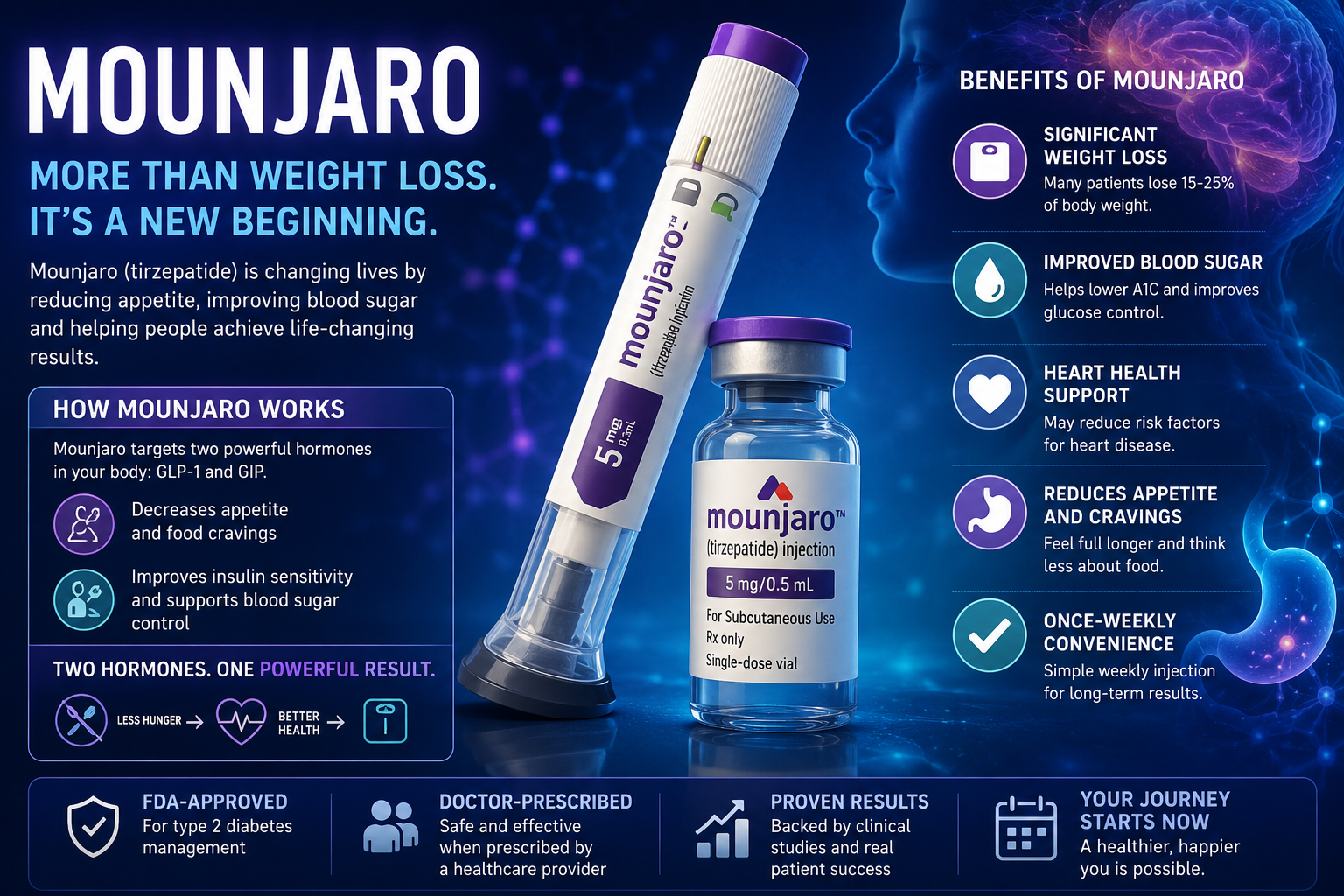
At first, it looked like just another diabetes medication. But within months, stories began flooding the internet:
- People forgetting to snack for the first time in their lives
- Fast food cravings disappearing overnight
- Emotional eating suddenly going silent
- Patients losing massive amounts of weight without feeling constant hunger
For many people, the most shocking part was not the weight loss.
It was the silence.
The food noise was gone.
Now researchers, doctors, investors, and even economists are beginning to ask a much larger question:
What happens to society when humans can chemically control hunger?
And more importantly:
What happens if this is only the beginning?
The End of “Food Noise”
One phrase appears repeatedly among Mounjaro users online:
“I finally feel normal around food.”
People describe spending years constantly thinking about eating:
- planning meals
- craving sugar
- stress snacking
- binge eating late at night
- obsessing over calories
Then suddenly, after starting Mounjaro, the thoughts quiet down.
This phenomenon has become known as “food noise reduction.”
Researchers believe Mounjaro affects reward pathways in the brain tied to appetite, satisfaction, and dopamine responses. Instead of constantly fighting cravings with willpower, patients often feel naturally uninterested in overeating.
For some users, this feels almost surreal.
People report walking past desserts without temptation. Others forget meals entirely. Some even say shopping malls and food courts feel emotionally different than before.
If these effects continue improving with newer generations of GLP-1 medications, we may be witnessing the beginning of a massive behavioral shift in human eating patterns.
A Future Where Obesity Becomes Rare
Today, obesity affects hundreds of millions of people worldwide. It increases risks for:
- heart disease
- stroke
- diabetes
- sleep apnea
- joint problems
- certain cancers
Entire industries have formed around managing these conditions.
But what if effective appetite-regulating medications become:
- cheap
- accessible
- long-lasting
- socially accepted
Some experts believe future generations may view obesity similarly to how modern society views smoking:
common in the past, but increasingly rare over time.
Imagine a future where:
- unhealthy weight gain becomes medically preventable
- metabolic diseases drop dramatically
- lifespan increases
- food addiction treatments become mainstream
- personalized appetite medications are tailored to your DNA
It sounds futuristic now.
But so did smartphones twenty years ago.
Could Mounjaro Change the Food Industry Forever?
The rise of GLP-1 medications is already creating ripple effects across the economy.
Some analysts believe appetite suppressing drugs could eventually impact:
- fast food chains
- soda companies
- snack manufacturers
- alcohol brands
- grocery stores
- restaurant portions
Why?
Because many users naturally consume less food without forcing themselves.
Some patients report:
- reduced cravings for sugary drinks
- less interest in alcohol
- smaller grocery bills
- fewer impulsive food purchases
Large corporations are already monitoring these trends closely.
If millions of people begin eating significantly less, entire industries may need to adapt.
Future restaurants could prioritize:
- nutrient density
- high-protein meals
- smaller portions
- functional foods
- metabolic optimization
The culture of oversized portions may slowly fade.
The Psychological Shock of Rapid Weight Loss
Not every effect of Mounjaro is physical.
Many users experience unexpected emotional and psychological changes after dramatic weight loss.
Some report:
- improved confidence
- reduced social anxiety
- better mobility
- increased energy
- feeling younger
But others describe something stranger:
A complete identity shift.
People who struggled with weight their entire lives sometimes feel disconnected from their old selves. Rapid transformation can affect relationships, routines, habits, and even personality.
Friends and family may react differently. Social dynamics change. Dating experiences shift. Some users even describe “survivor’s guilt” around others still struggling with obesity.
In the future, psychologists may need entirely new frameworks for understanding identity after medical body transformation.
Are We Rewriting Human Evolution?
Humans evolved in environments where food scarcity was dangerous.
Our brains became wired to:
- seek calories aggressively
- store fat efficiently
- crave sugar and salt
- overeat during abundance
These survival mechanisms once kept humans alive.
Now they contribute to global obesity.
GLP-1 medications like Mounjaro may represent one of the first major pharmaceutical attempts to override ancient evolutionary programming itself.
In other words:
humans are beginning to chemically modify one of the oldest survival systems in biology.
That raises massive philosophical questions.
If medications can regulate hunger today:
what will tomorrow’s enhancements regulate?
- sleep?
- motivation?
- stress?
- focus?
- emotional attachment?
- addiction?
- aging?
Mounjaro might not simply be a weight loss drug.
It may be an early glimpse into the age of biological optimization.
Final Thoughts
Mounjaro may ultimately become far more significant than a popular weight loss injection.
It could represent the start of an entirely new relationship between humans and hunger itself.
For the first time in history, millions of people are experiencing what it feels like to live without constant cravings dominating their minds.
That shift alone could transform:
- healthcare
- food culture
- economics
- psychology
- longevity
- human behavior
And if future generations of these medications become even more advanced, historians may look back on this moment as the beginning of a new metabolic era for humanity.
The age where hunger stopped controlling us.